

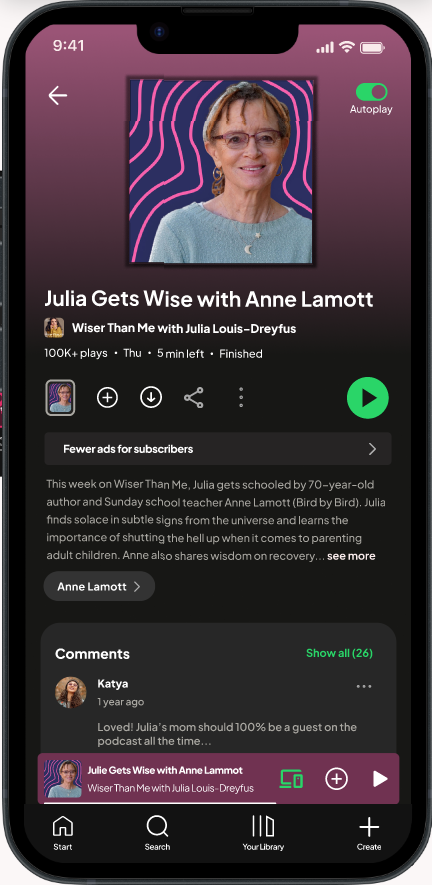
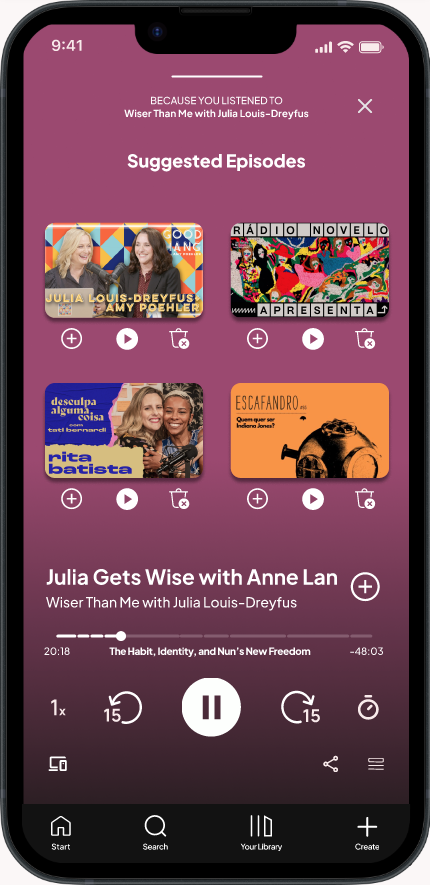
Overview
Spotify offers personalized music recommendations but provides a less tailored experience for podcast listeners.
This project explored how a new Suggested Episodes feature could help users discover individual podcast episodes based on their interests, listening history, and favorite creators. The goal was to make podcast discovery feel as personalized and effortless as music recommendations.
The Challenge
While Spotify recommends podcasts, users often need to browse entire shows to find relevant episodes. This creates unnecessary friction, especially for listeners interested in specific topics rather than committing to a full podcast.
The challenge was to design a feature that delivers personalized episode recommendations while fitting naturally into Spotify's existing experience.
User Pain Points
- Discovering relevant podcast episodes requires too much searching.
- Recommendations focus on podcasts instead of individual episodes.
- Users miss valuable content from shows they don't already follow.
- Finding new episodes based on interests feels time-consuming.
The Solution
Design personalized Suggested Episodes feature that recommends podcast episodes based on users' listening history, interests, and followed shows. The feature makes podcast discovery more relevant and engaging while reducing the effort required to find new content users are likely to enjoy.
Research
With the researches I wanted to learn how Spotify podcast listeners discover new episodes, so that I could design a new feature that would help them simplify this search and make it more tailored.
Methodologies
- Competitive Analysis
- User Interviews
- Online Survey
- Usability Testing
Competitive Analysis

Strengths
- Excellent for music video
- Powerful search and recommendation engine
- Integration with Google
- Massive content library
Weakness
- Inconsistent user experience.
- Background play is limited.
- Seen as secondary YouTube
- Artist-focused features

Strengths
- High-quality audio - Free
- Clean, ad-free interface
- Human curated
- Exclusive artist content.
- Strong privacy protections
Weakness
- Less effective recommendations
- Focused on Apple users.
- Clunky UI.
- Limited podcast integration

Strengths
- Included with Amazon Prime.
- Integration with Alexa and Echo
- Competitive HiFi/Lossless pricing
- Large catalog
Weakness
- Confusing tier system (Free X Prime X Unlimited)
- Less polished UI
- Less advanced music discovery.
User Research
The research aimed to understand how users currently discover new podcast episodes on Spotify, identify common behaviors and pain points, and explore how frequently and in which contexts they do this. These insights highlighted opportunities to improve content management and create a more personalized listening experience.
Participants were primarily women aged 35–40 from Germany and Brazil, most of whom were employed full-time.
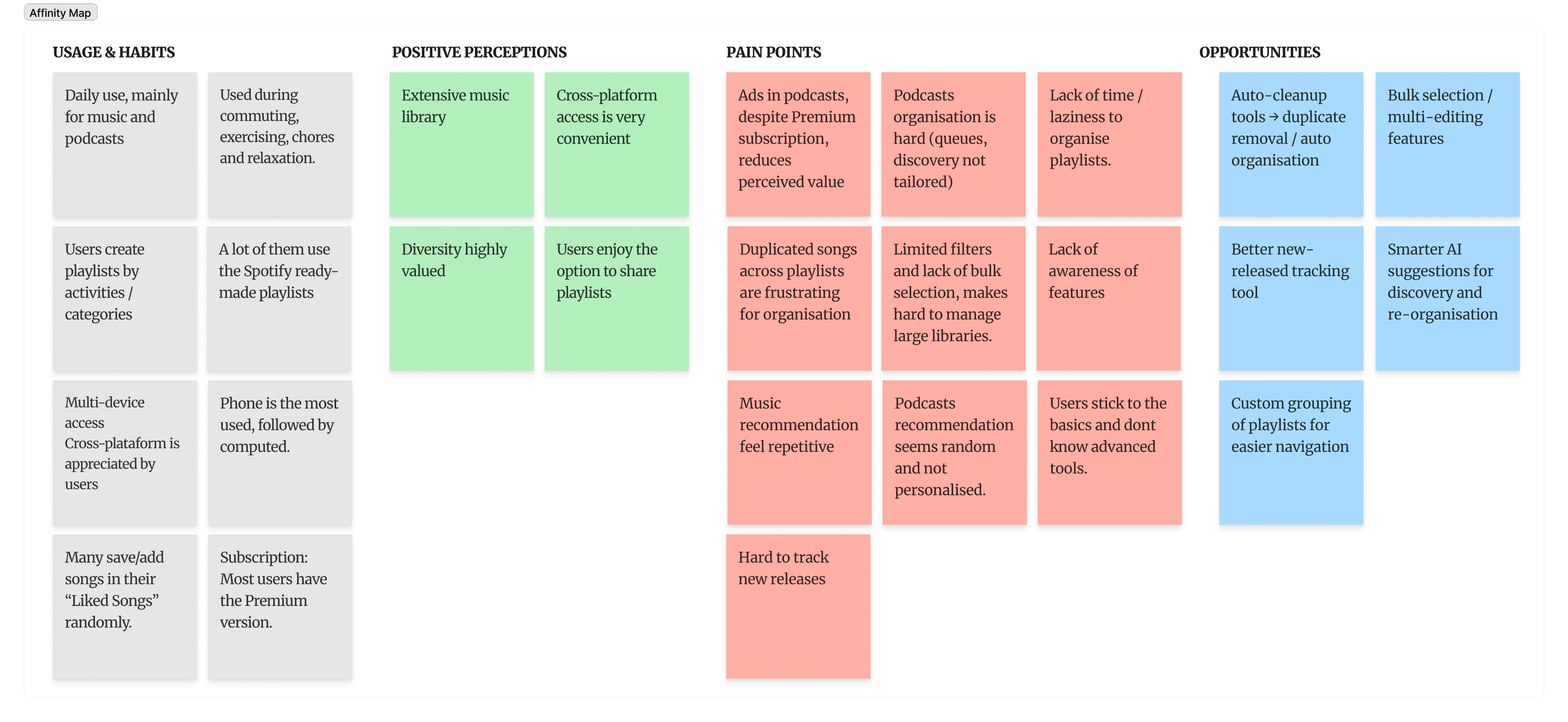
Affinity Map
To synthesize all the information I had gathered from the user interviews, I wrote my findings on sticky notes and created an Affinity map.
By identifying common patterns across my findings, I was able to uncover key insights which helped me understand who the users were and what they truly needed.
Key Research Insights
Research revealed several consistent behaviors:
- Users discover music more easily than podcasts.
- Listeners often search for topics rather than podcast titles.
- Personalized recommendations increase engagement.
- Users prefer quick access to relevant episodes instead of browsing entire catalogs.
- Familiar navigation encourages adoption of new features.
These findings shaped the recommendation experience and interaction design.
Define
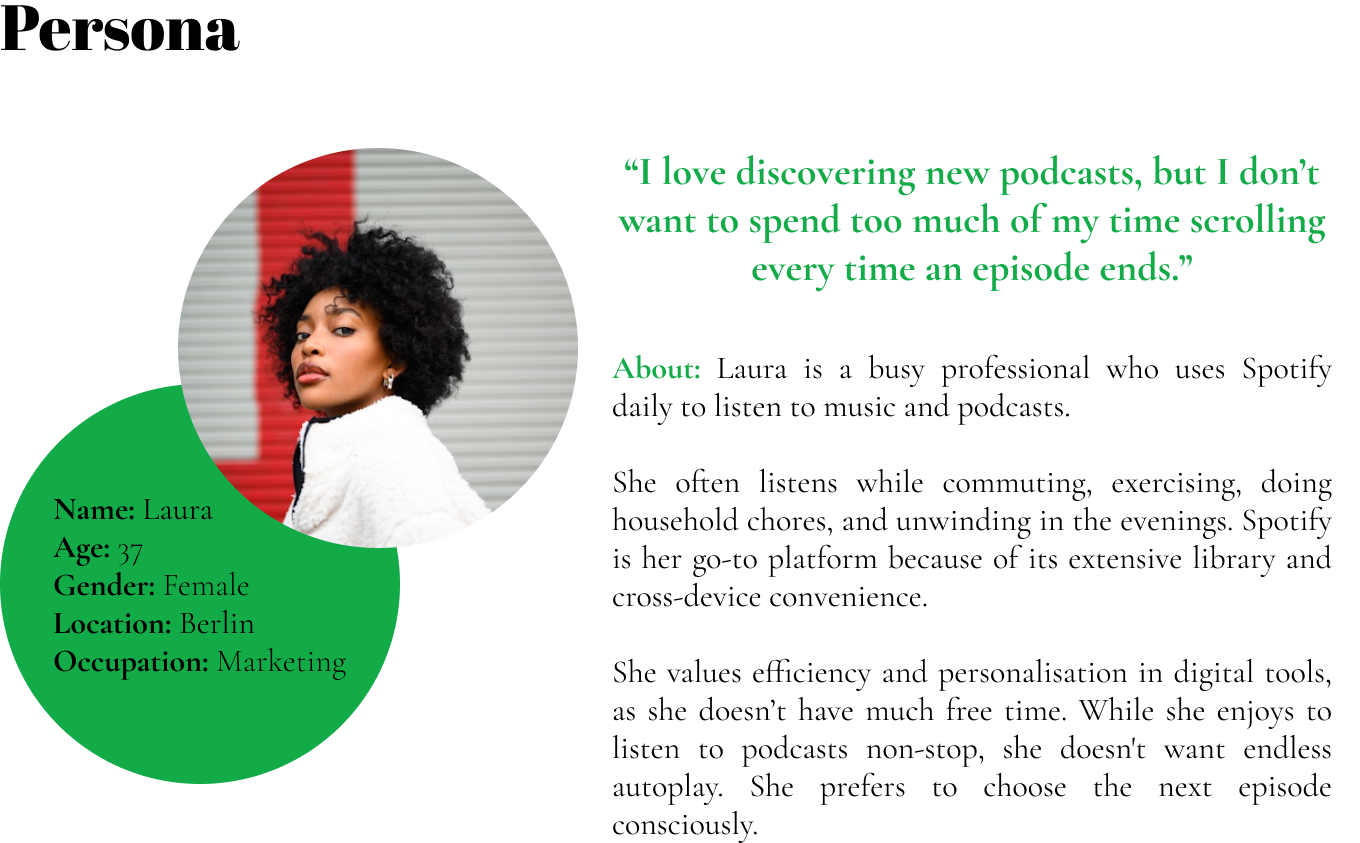
Research highlighted the need for personalized content discovery rather than additional browsing options. So, I developed a persona and project goals focused on helping users discover relevant episodes with minimal effort.
The solution prioritized seamless integration with Spotify's existing interface while introducing a dedicated recommendation experience.
Problem Statement
Now that I have a better understanding of who the users are, I decided to start thinking about what problems we are trying to solve for them, by creating point-of-view (POV) statements and How Might We (HMW) questions that would help drive my process.
POV
Spotify Premium users who regularly listen to podcasts, need a simple, yet relevant way to discover new episodes once their current one ends, because current recommendations feel impersonal, repetitive, and disconnected from the user's immediate listening context.
HMW
How might we make podcast discovery smoother for users who turn off Autoplay?
How might we provide contextual episode suggestions that feel fresh and relevant without forcing continuous playback?
How might we help users stay engaged and curious while maintaining full control of their listening experience?
Project Goals
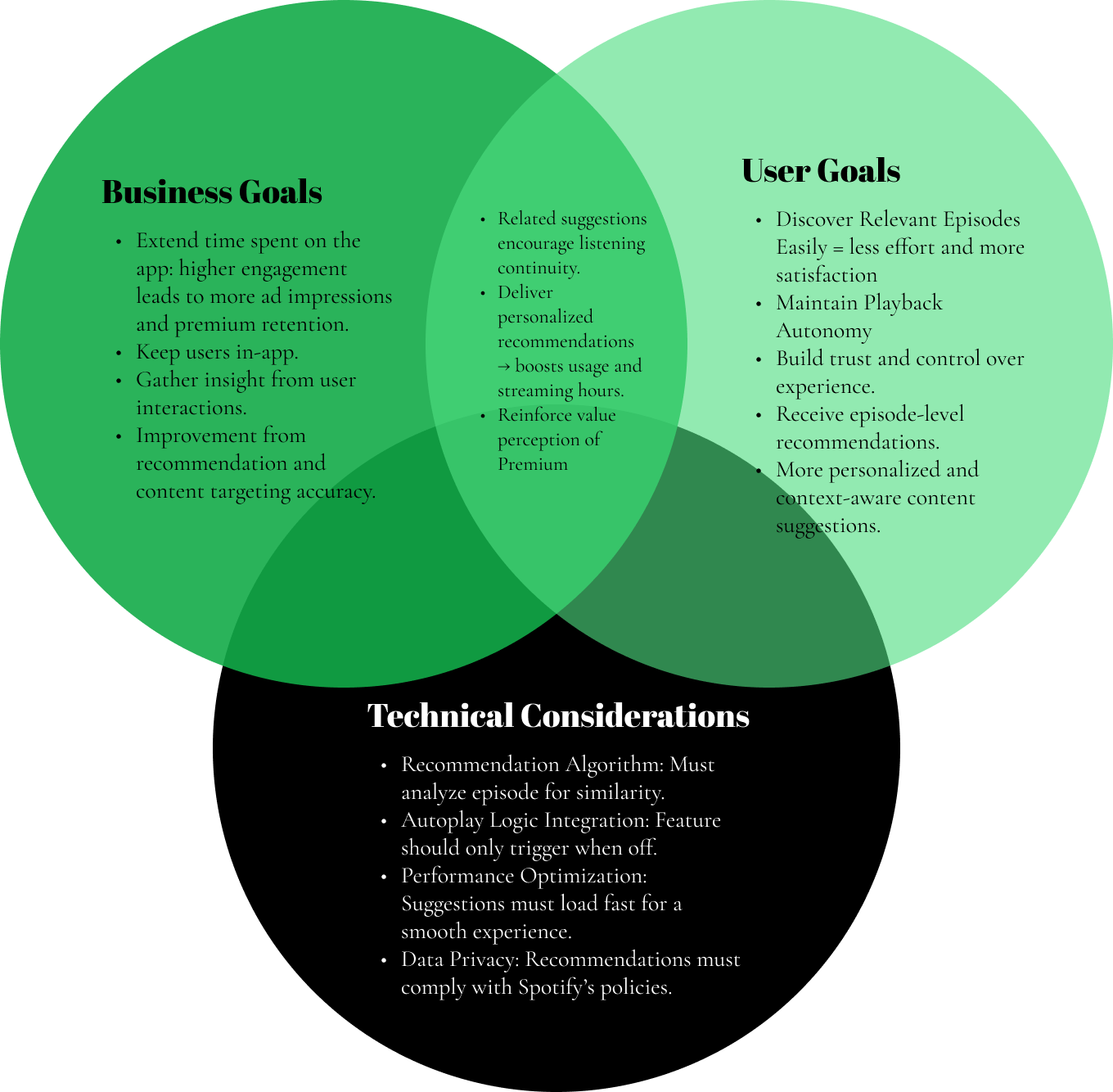
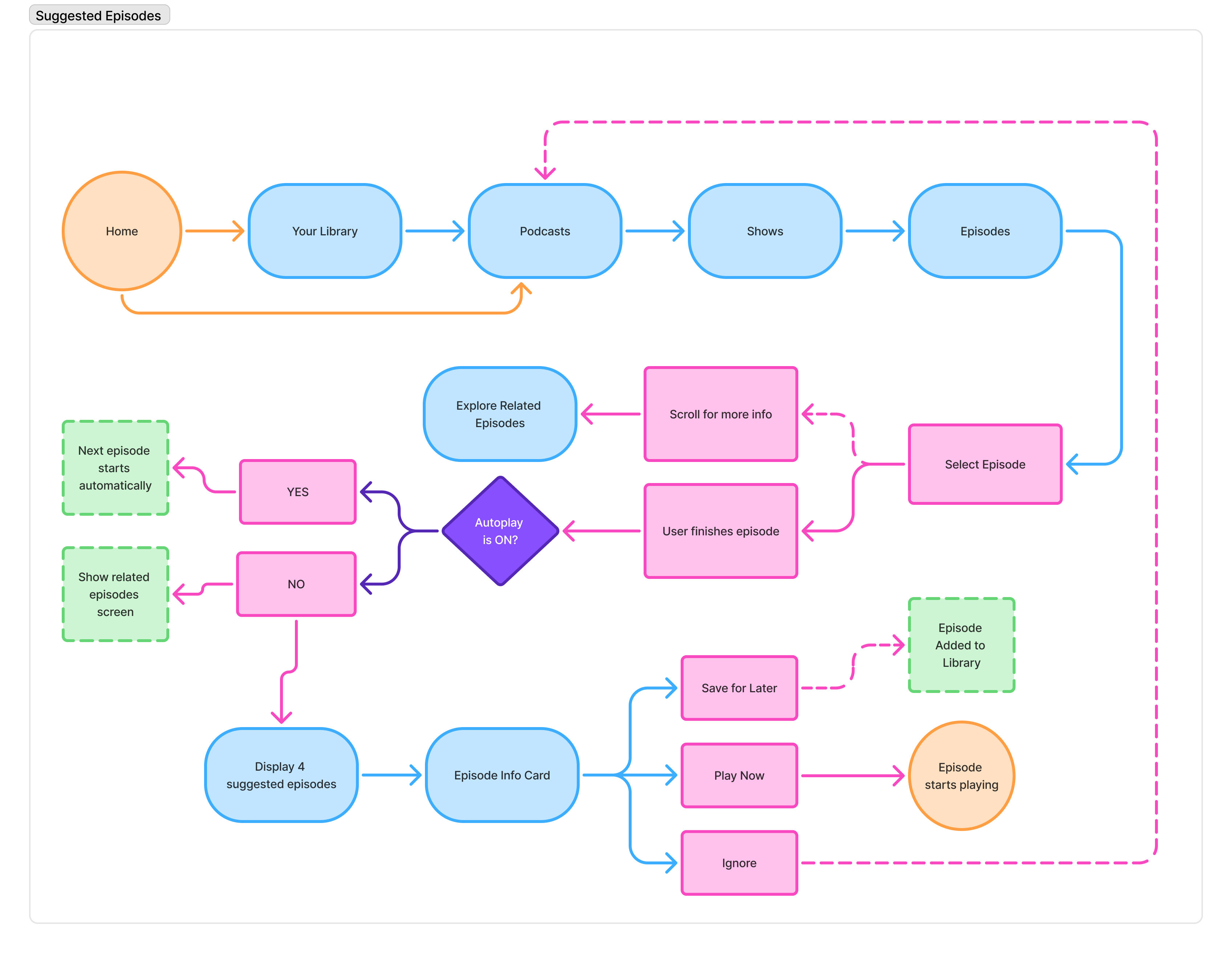
User Flow
To guide my design decisions and have a better idea of how my users would interact with the app, I created a user flow for the feature 'Suggested Episodes'. This helped me map out the main user journey and identify any potential pain points early in the process.
Design
The feature was designed using Spotify's existing design language to ensure consistency and familiarity.
Beginning with sketches and wireframes, I explored different recommendation layouts before refining the experience into a high-fidelity interactive prototype.
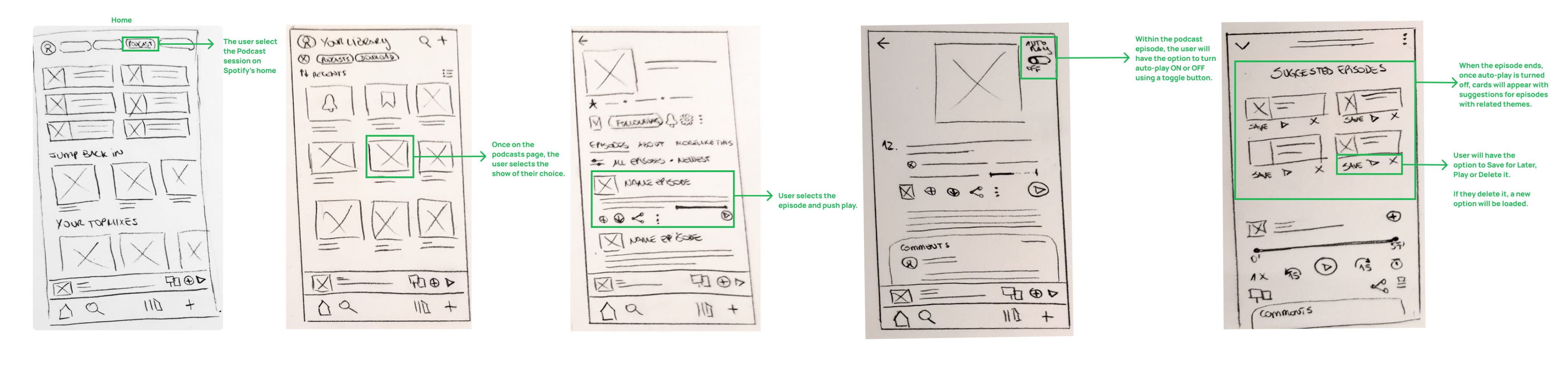
Particular attention was given to maintaining Spotify's visual hierarchy while introducing new discovery patterns.
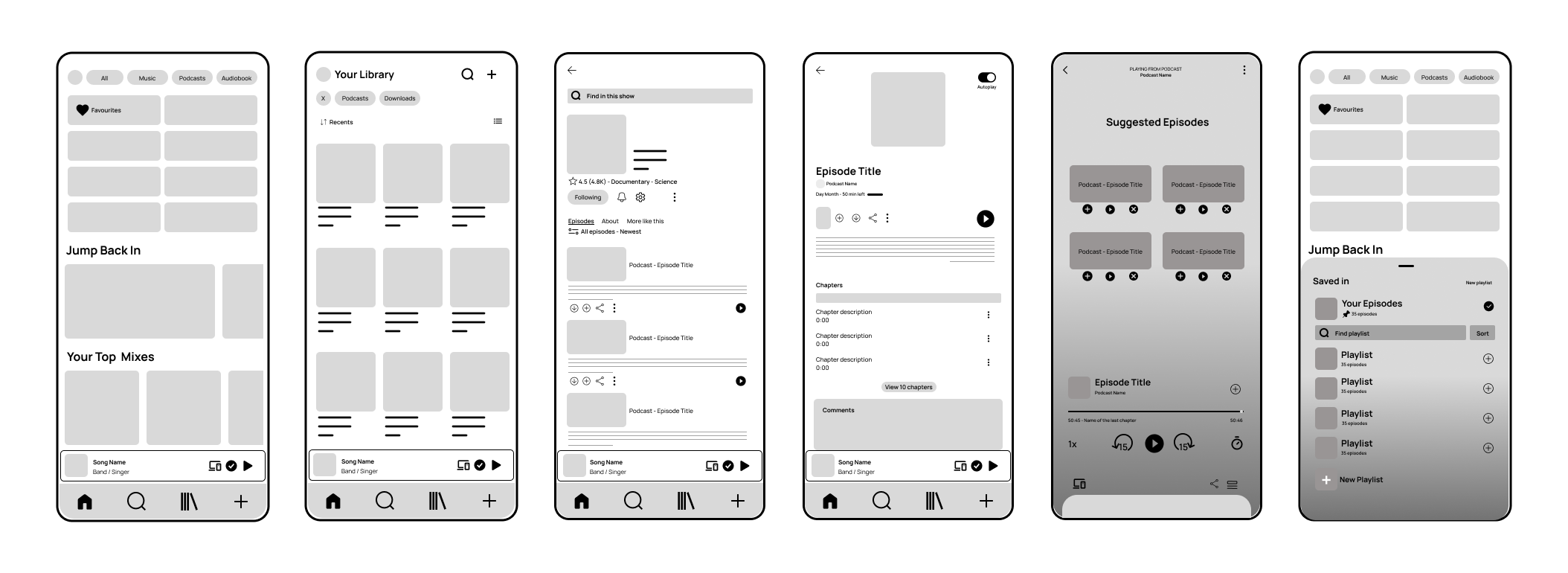
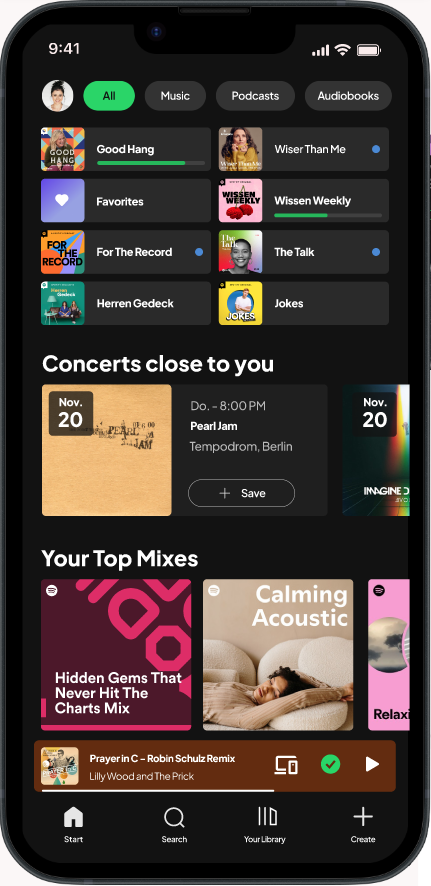
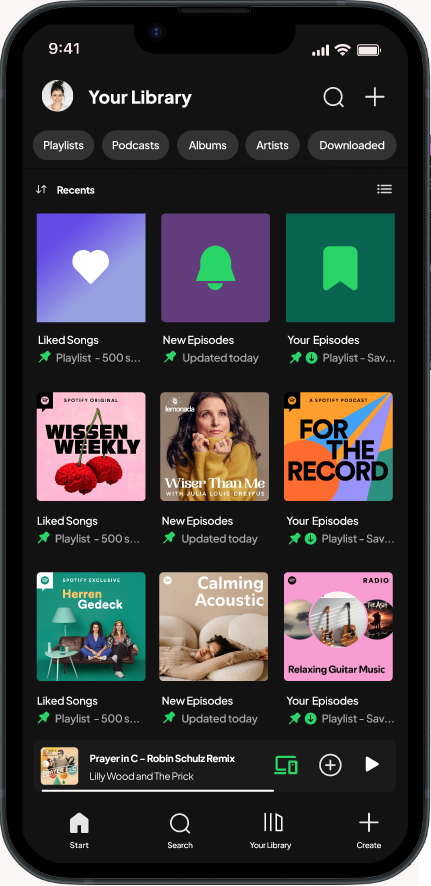
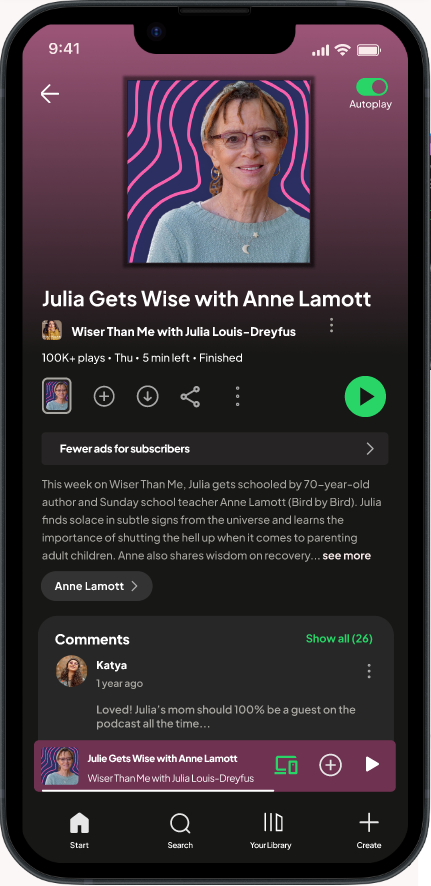
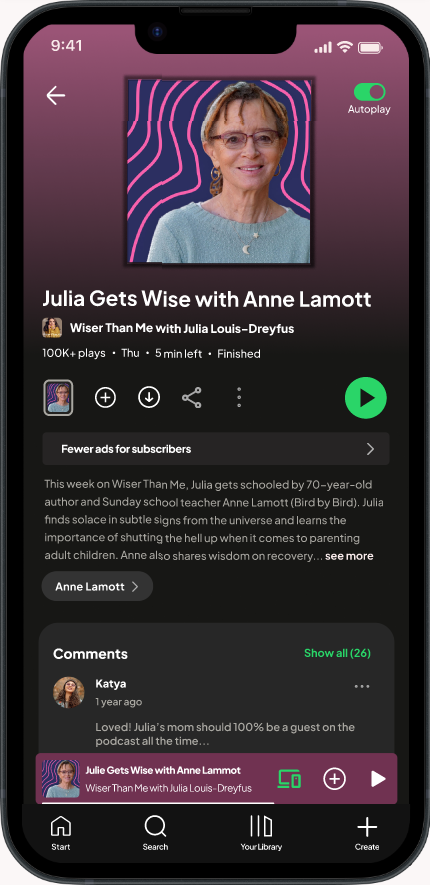
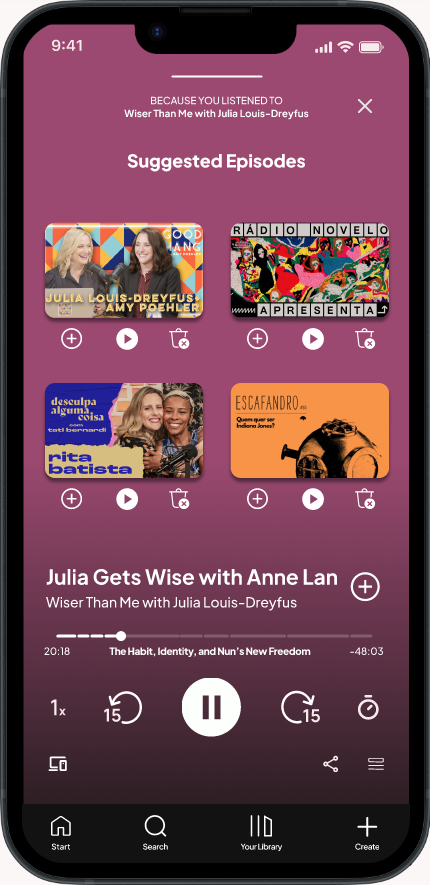
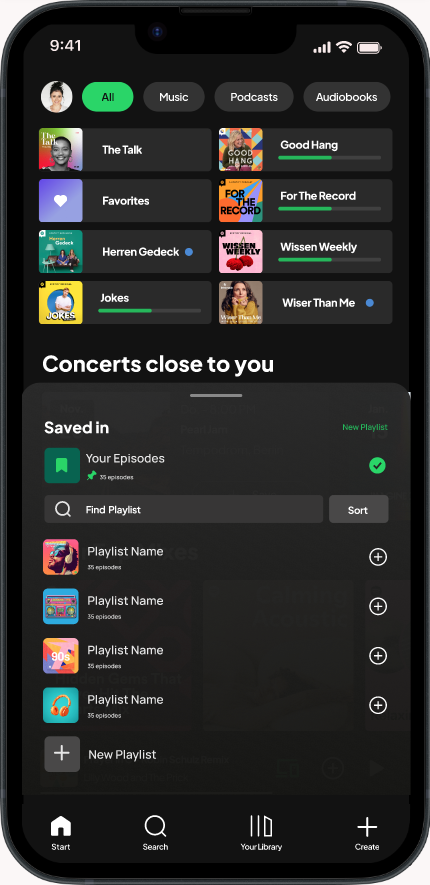
High-Fidelity Mockups
The Suggested Episodes feature provides personalized podcast recommendations based on listening habits and interests.
The final experience makes discovering podcast content faster, more relevant, and more engaging.
Testing & Iteration
Usability Testing
Participants completed common podcast discovery tasks using an interactive prototype.
Key Findings
Users quickly understood the recommendation cards and appreciated receiving individual episode suggestions rather than entire podcasts.
Testing also highlighted opportunities to improve recommendation explanations and increase the visibility of save actions.
Design Improvements
Following testing, I made few refinements:
- Improved recommendation labels
- Increased visibility of primary actions
- Simplified navigation between recommendations
- Refined information hierarchy
- Enhanced interaction feedback
Which made the overall experience even more seamless.
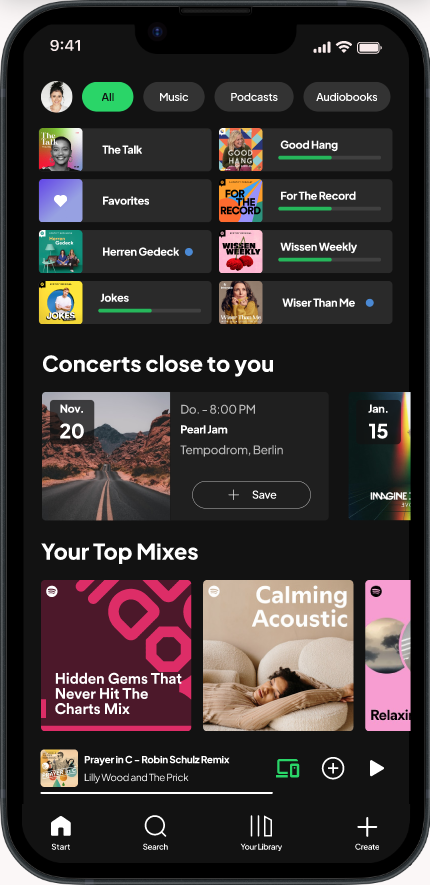
Prototype
Conclusion
Challenges
The biggest challenge was introducing a new discovery experience without disrupting Spotify's familiar interface.
Lessons Learned
This project reinforced how personalization can reduce friction and improve content discovery while maintaining a simple user experience.
Next Steps
Future iterations could include:
- Mood-based episode recommendations
- Collaborative podcast recommendations
- Smart listening queues
- AI-generated listening collections